Selected Work
Portfolio
Game design, systems work, and production.
Two projects in active development,
an award-winning game jam entry, plus media I produced during my time at Futuregames.
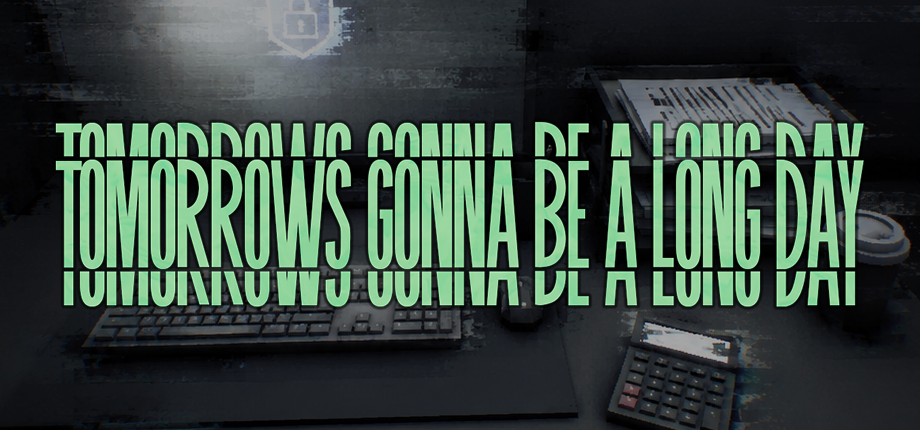
Narrative Horror, Unity
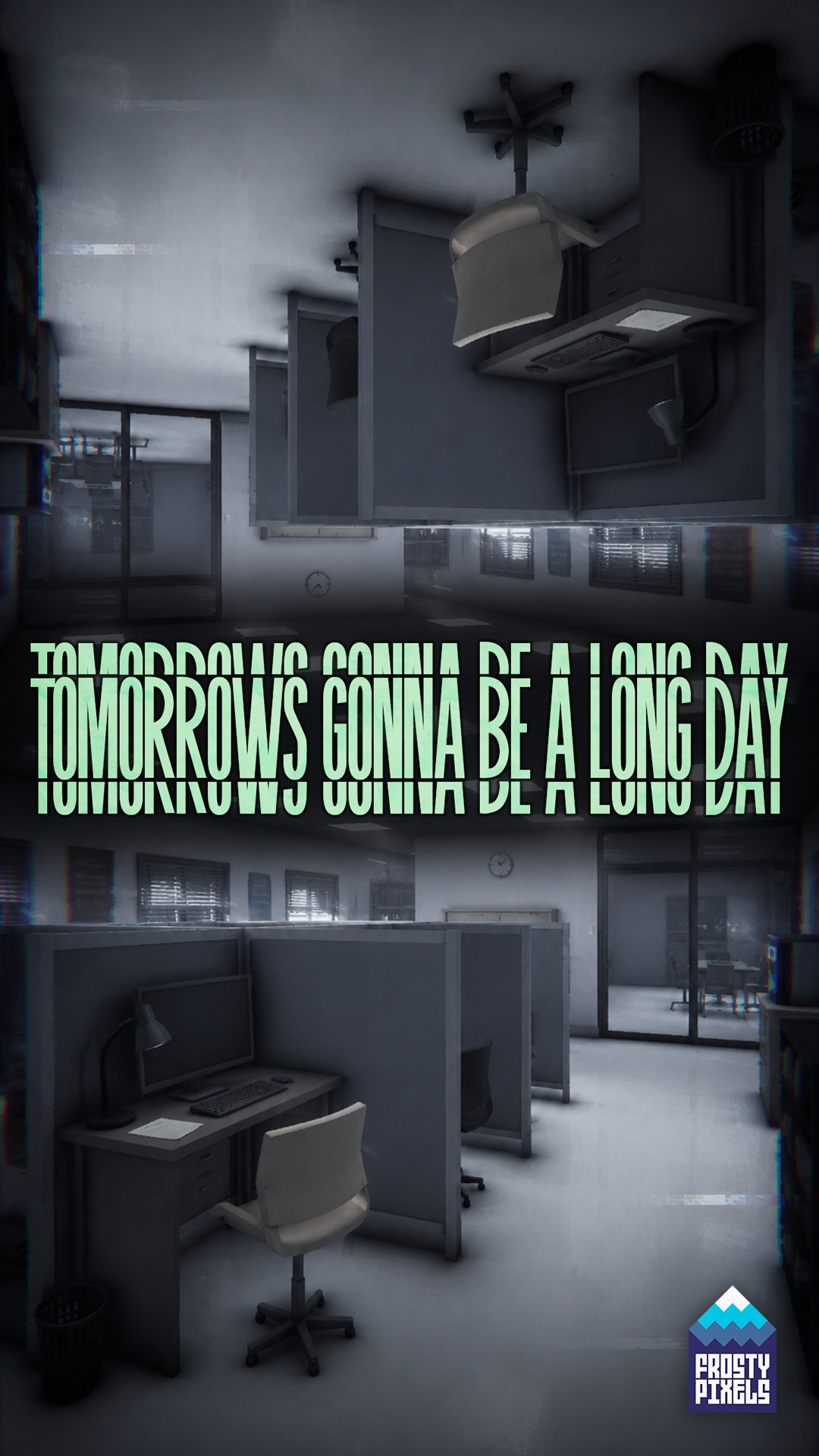
Tomorrow's Gonna Be a Long Day
You are the last human in the loop. Every ticket is someone's life. Every response is a choice.
A narrative horror game about surviving one work week as a support agent at a company that quietly owns the things people need to live: their homes, their medicine, their transit, their warmth. Every subscription can be revoked. Every complaint can be reframed. The voices on the other side of the screen shift from annoyed to afraid.
Your humanity doesn't break all at once. It erodes, ticket by ticket, until the nightmares start. How long before you can't tell the difference between company policy and cruelty?
Core features
- A work week that starts routine and quietly falls apart.
- Ticket triage as the central mechanic, where every choice shapes tone, relationship, and outcome.
- A growing chorus of customer voices that carry the real weight of the horror.
- Mood, repetition, and ethical strain as the engine driving it all.
Themes
- Work as the slow erosion of self.
- Technology as a form of custody.
- Language as a tool of control.
- The quiet terror of being useful to the wrong thing.
From the editor
Work-in-progress captures straight out of Unity, editor chrome and all. Click any image to enlarge.
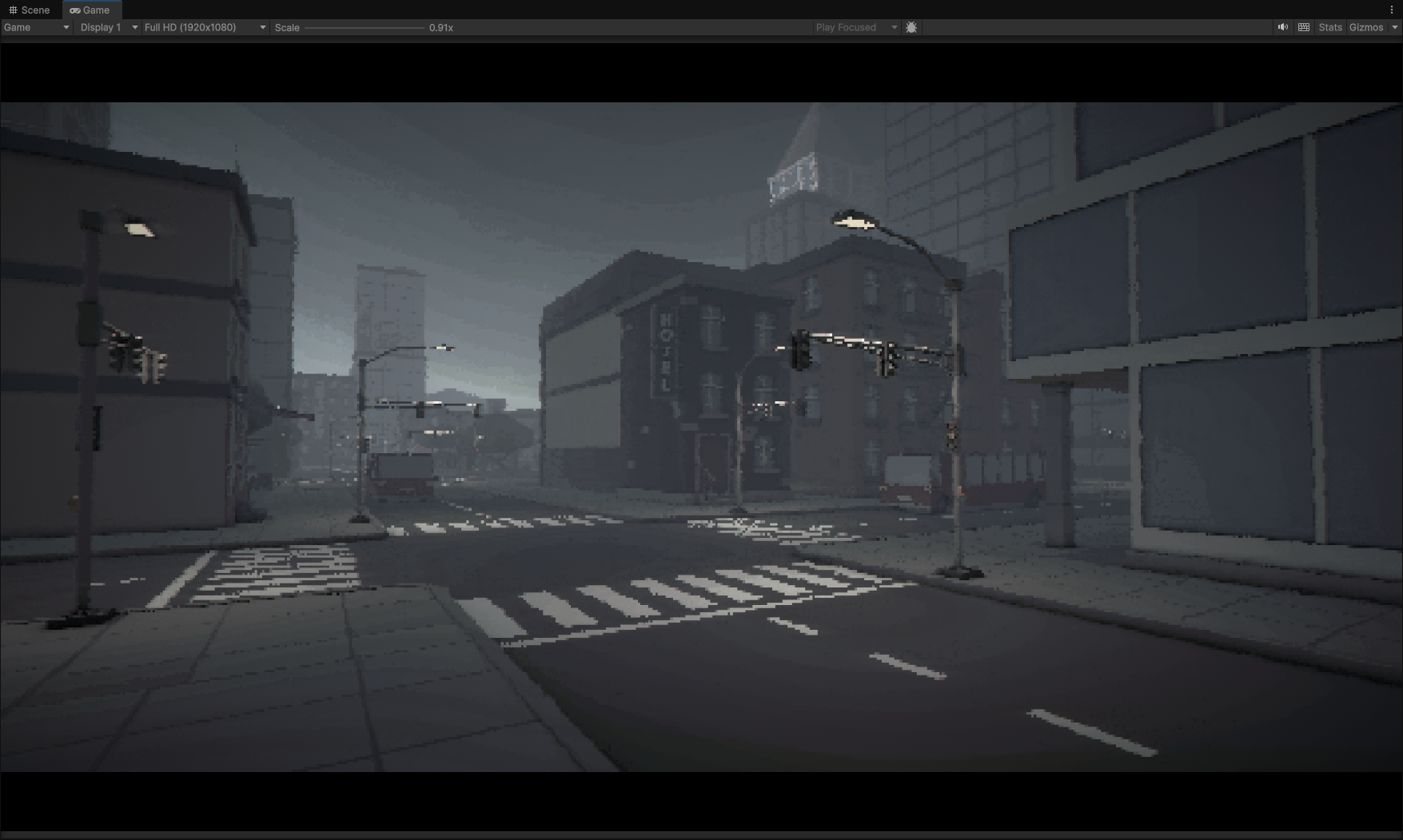 City street, one of the between-shift dream spaces.
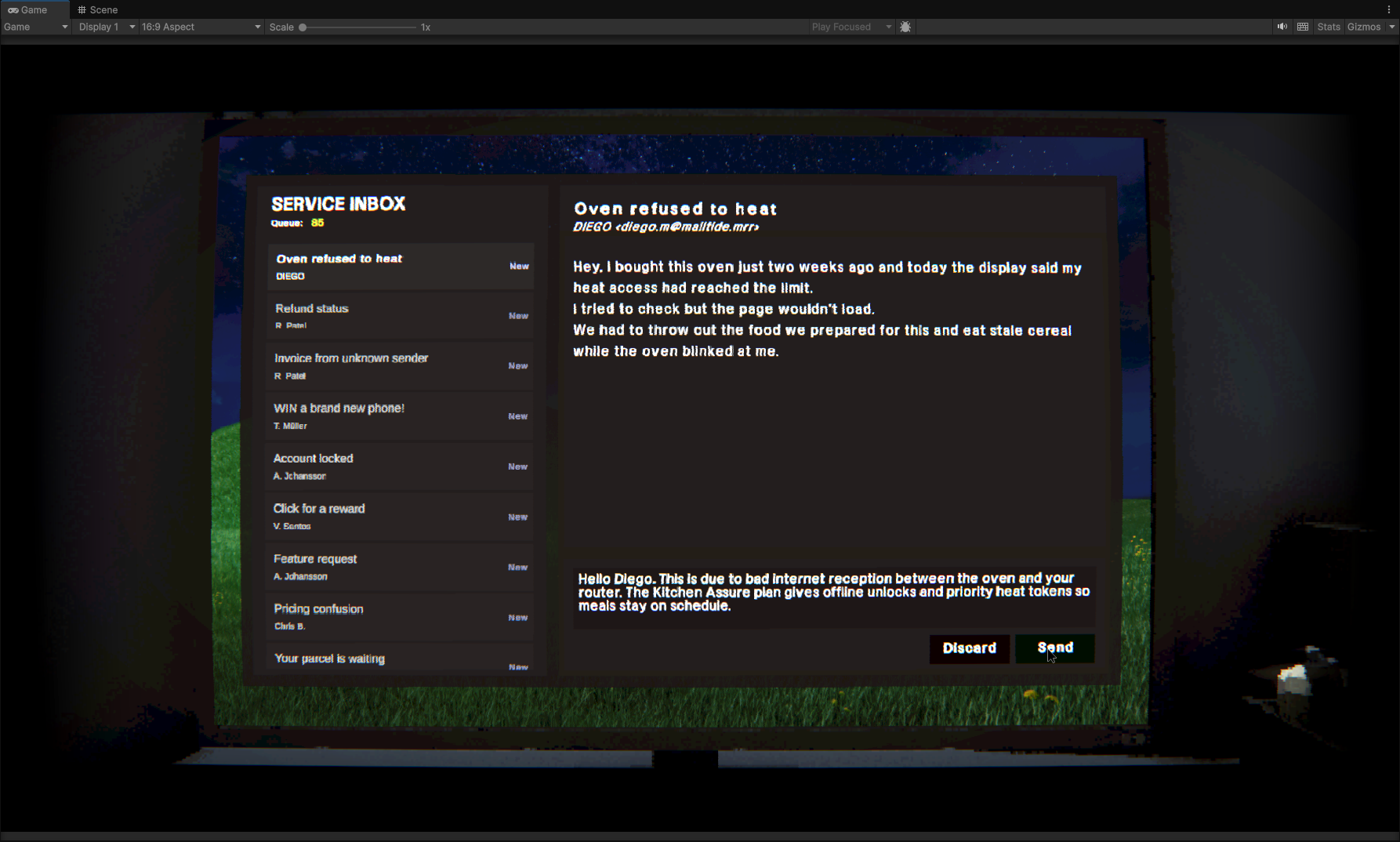 Service Inbox, the ticket triage core loop.
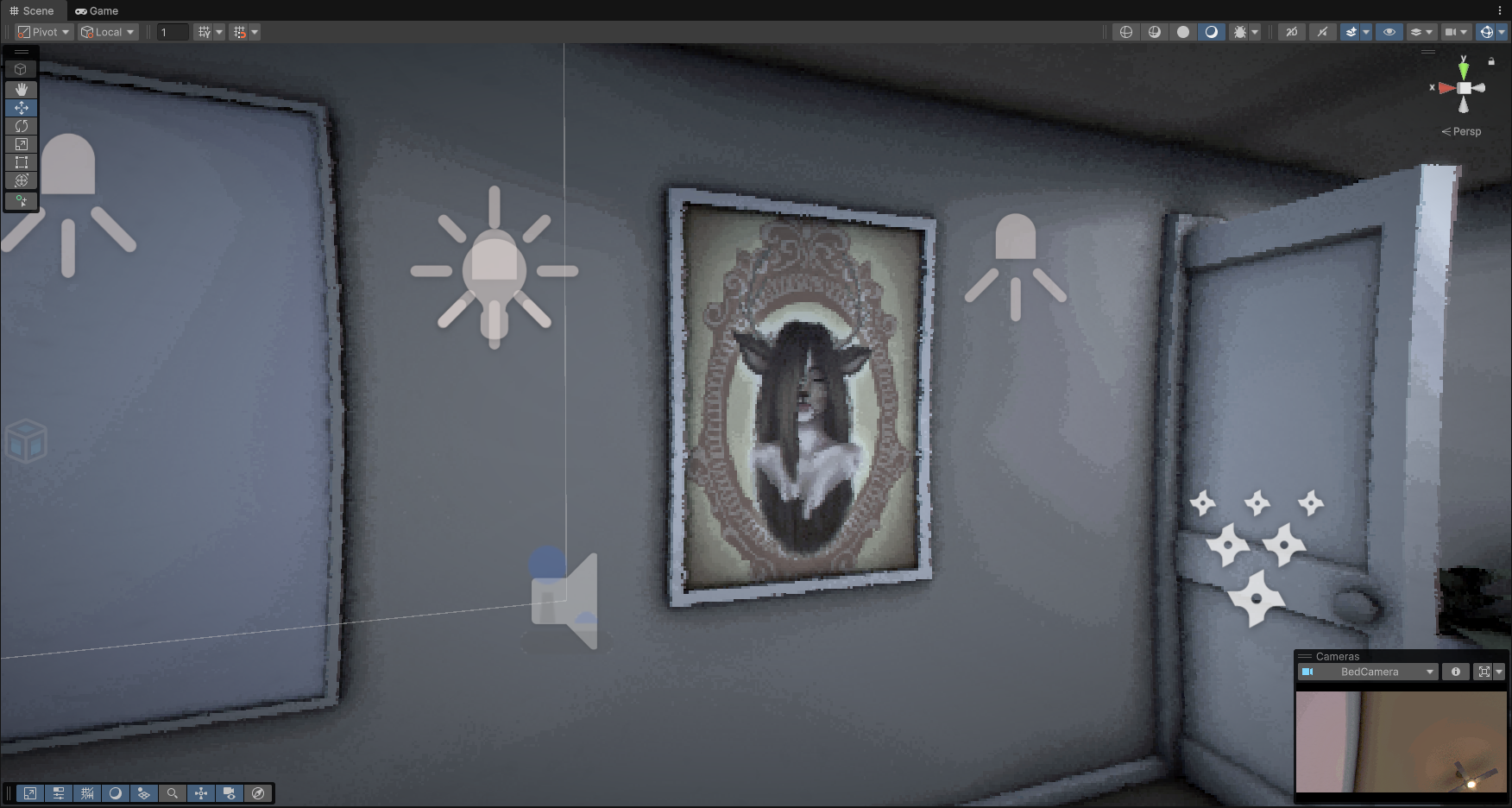 Bedroom set, scene view with lighting and camera gizmos.
Tools I built
Designer-facing Unity components, so content can be authored in the inspector without new code.
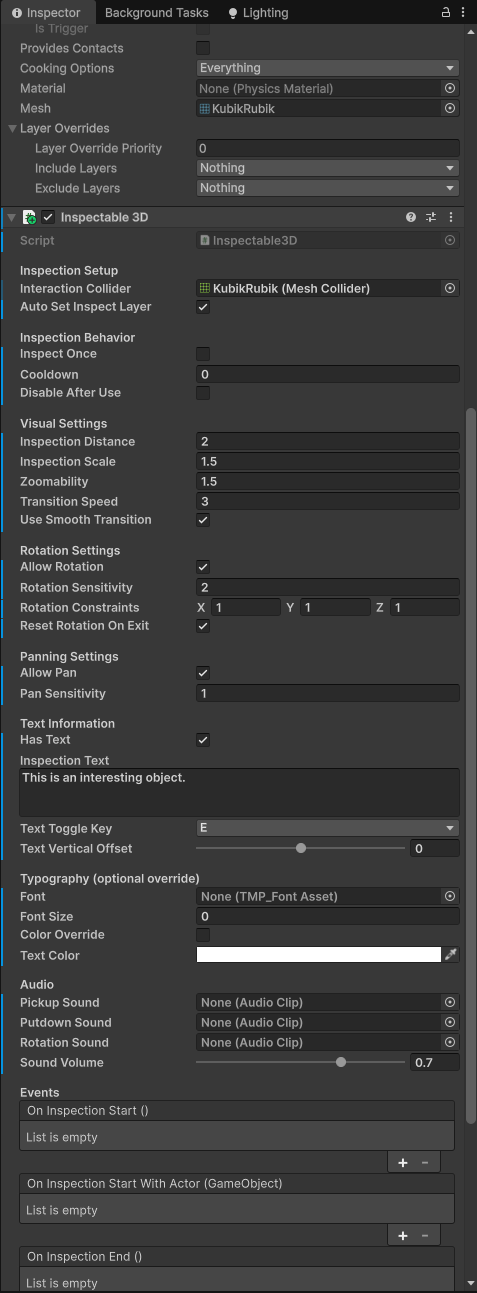
Inspectable3D
Lets any prop be picked up and examined without bespoke code. Everything a scene needs is exposed in the inspector: interaction collider and auto-layering, inspect distance, scale and zoomability, smooth transition speed, per-axis rotation constraints and sensitivity, panning, an optional text overlay with its own toggle key and typography override, pickup, putdown and rotation sounds, plus start and end UnityEvents.
The flyer below is this component doing its job.
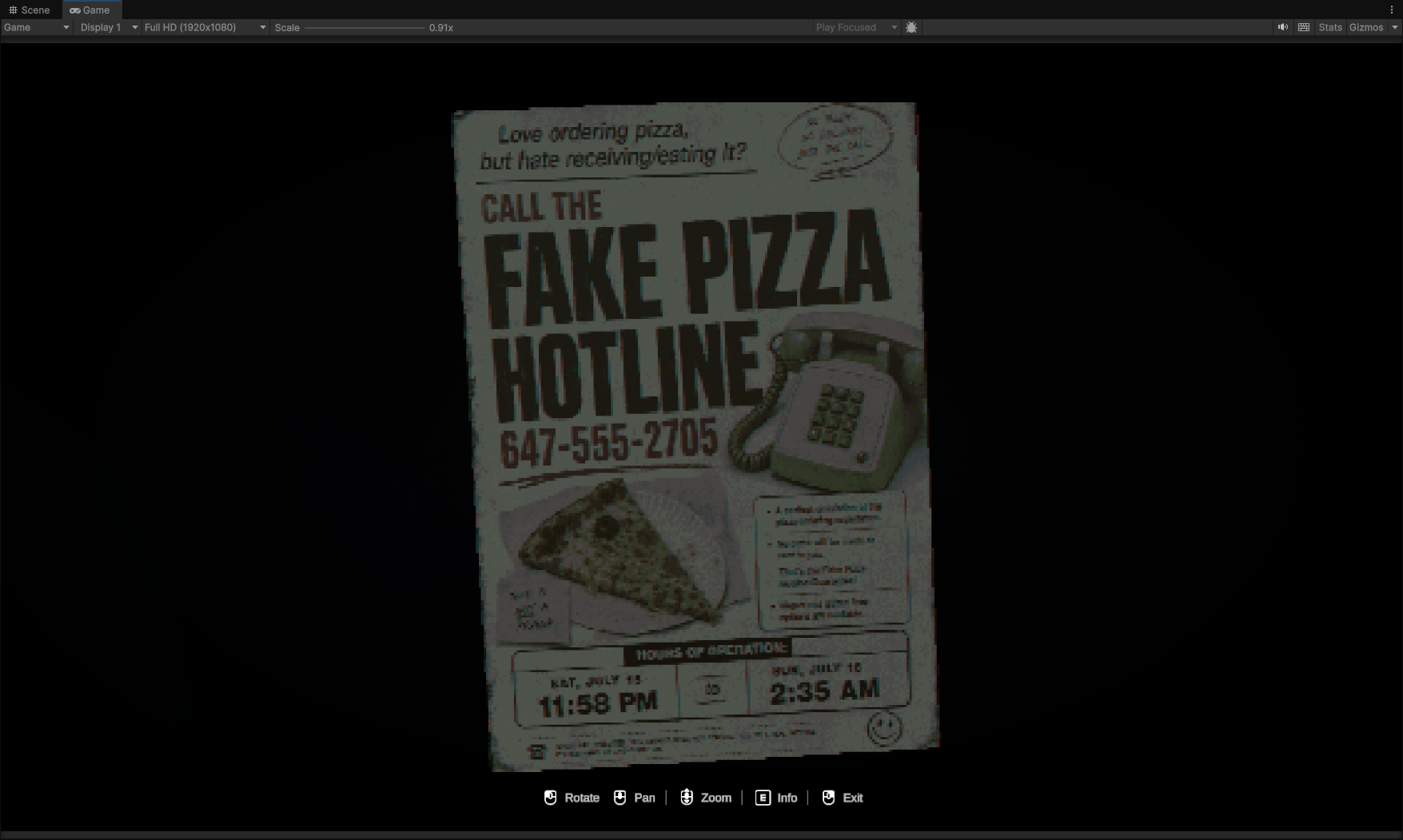 An inspectable prop, rotated and read in-world.
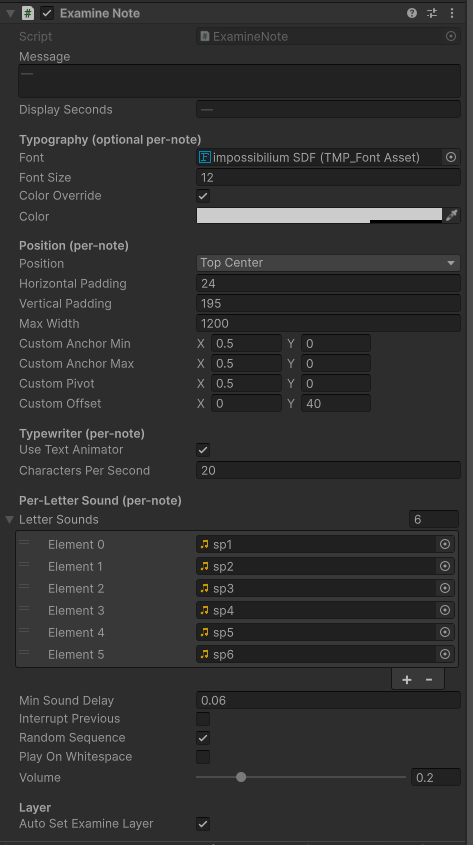
ExamineNote
The click-to-examine companion. It zooms the camera onto an object and raises its dialogue text, which is how the environment delivers context clues and the player's own internal thoughts.
Each note carries its own presentation: message and display duration, a per-note typography override for font, size and colour, anchored screen position with padding and max width, and a typewriter reveal at a set characters-per-second. Per-letter sounds are drawn from a pool with a minimum delay, random sequencing, and the option to skip whitespace, so text never reads as one flat tone.
First public playtest
Skeå: Creative Connect 2026, Skellefteå, June 2026.
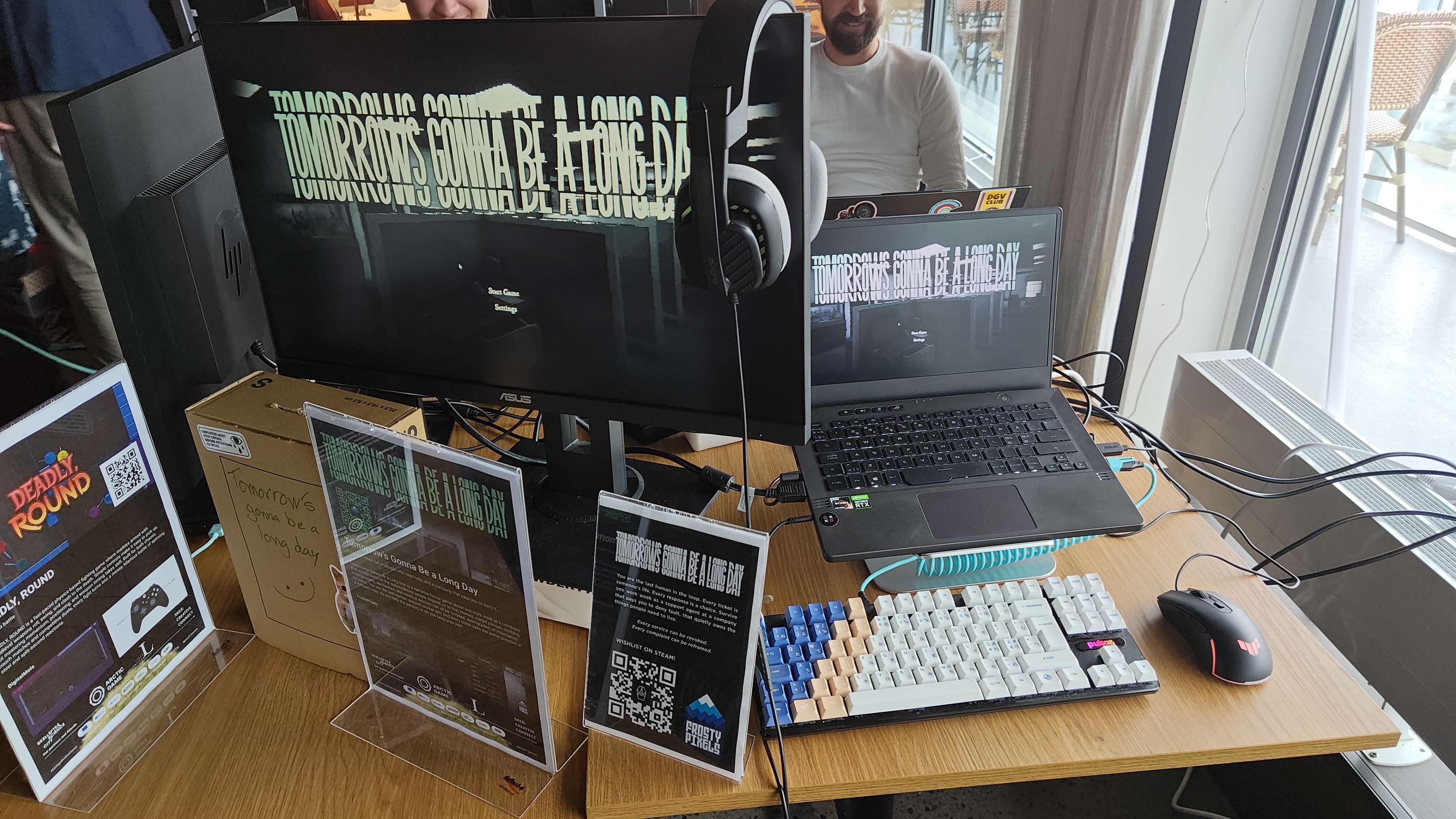 The showcase table at Skeå: Creative Connect 2026, back on the main menu between players.
Out of the editor
The first time the game was showcased and playtested in public. Laptop, a mirrored monitor, and strangers sitting down with no explanation from me.
The feedback was genuinely good, and it came with a concrete list of tweaks and changes I'm working through now.
Fun fact: I did the showcase with a broken left hand after swerving out of a car crash on an e-scooter which fractured my scaphoid and compressed my lunate. I didn't go to the ER until the next day and still ran the playtesting with one hand. It made me realize how important it is to make the game playable one-handed, so I added that as a must-have todo.
Multiplayer Autobattler, Godot and Go
Battles of Prophecy
A hex-based autobattler with live PvP and an asynchronous mode, built at Giantsbane, whose website I also built.
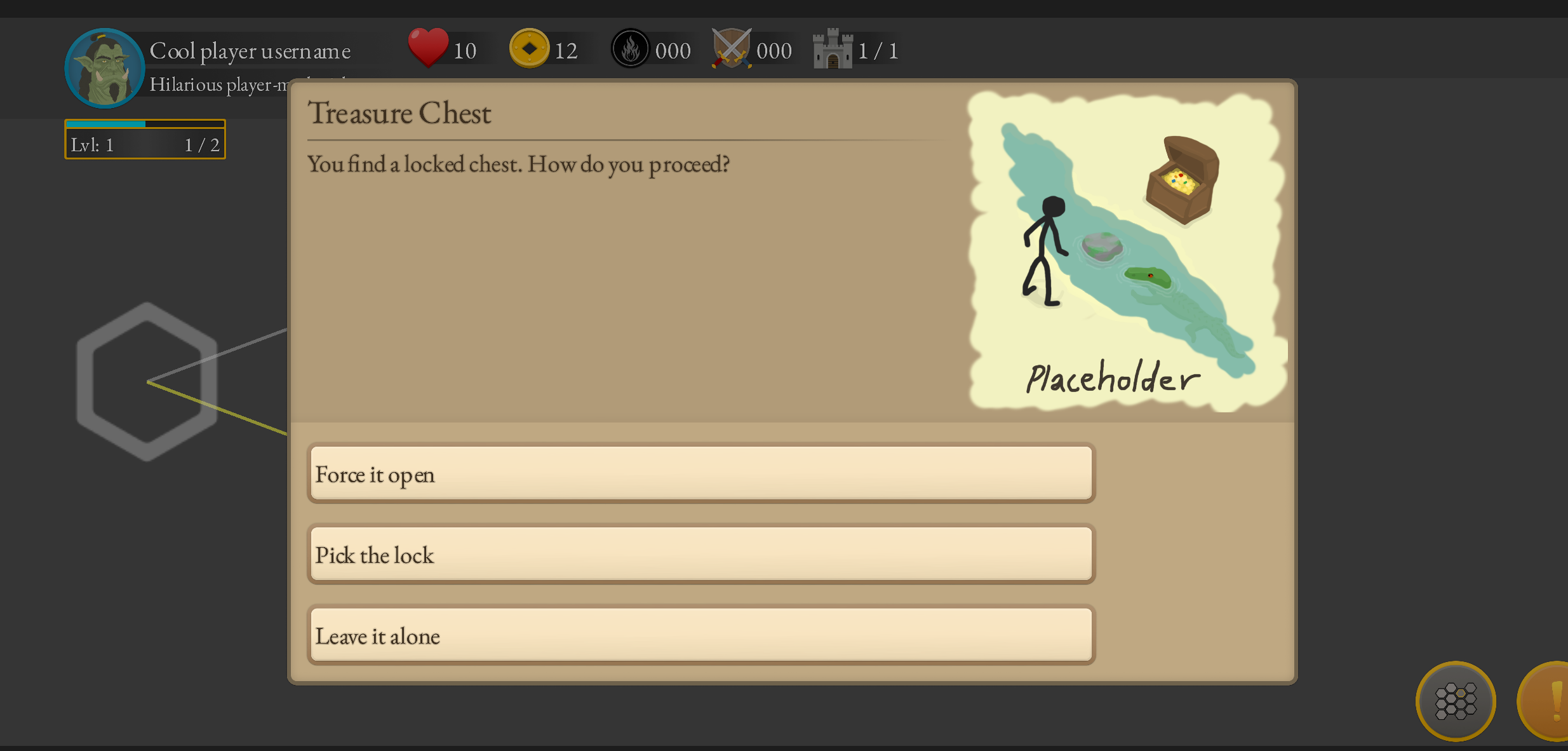
The screenshot above is our random encounter system, branching choice prompts layered on top of the board. Alongside it we got live PvP running on a live server node, and prototyped an async play mode for players who can't sit down for a full match.
Architecture
Godot on the client, with a network backend on Redis and PostgreSQL. Every autobattler fight is simulated on the server and the result is sent back for the client to replay, so the client never decides an outcome.
PostgreSQL handles long-term storage. Redis carries the player while they are online and playing, chosen for its speed and for its morph and mutex capabilities.
Anti-cheat
I'm currently building an early anti-cheat pass that flags impossible gold and impossible experience: totals a legitimate session could not have produced. It runs entirely server side, like everything else that decides state.
Async prototype
The first pass at async mode was built in ebiten, a 2D game library for Go. It was a throwaway prototype meant to be ported into our own Go protobuf system once the rules settled.
From the editor
Working captures from Godot, editor windows included.
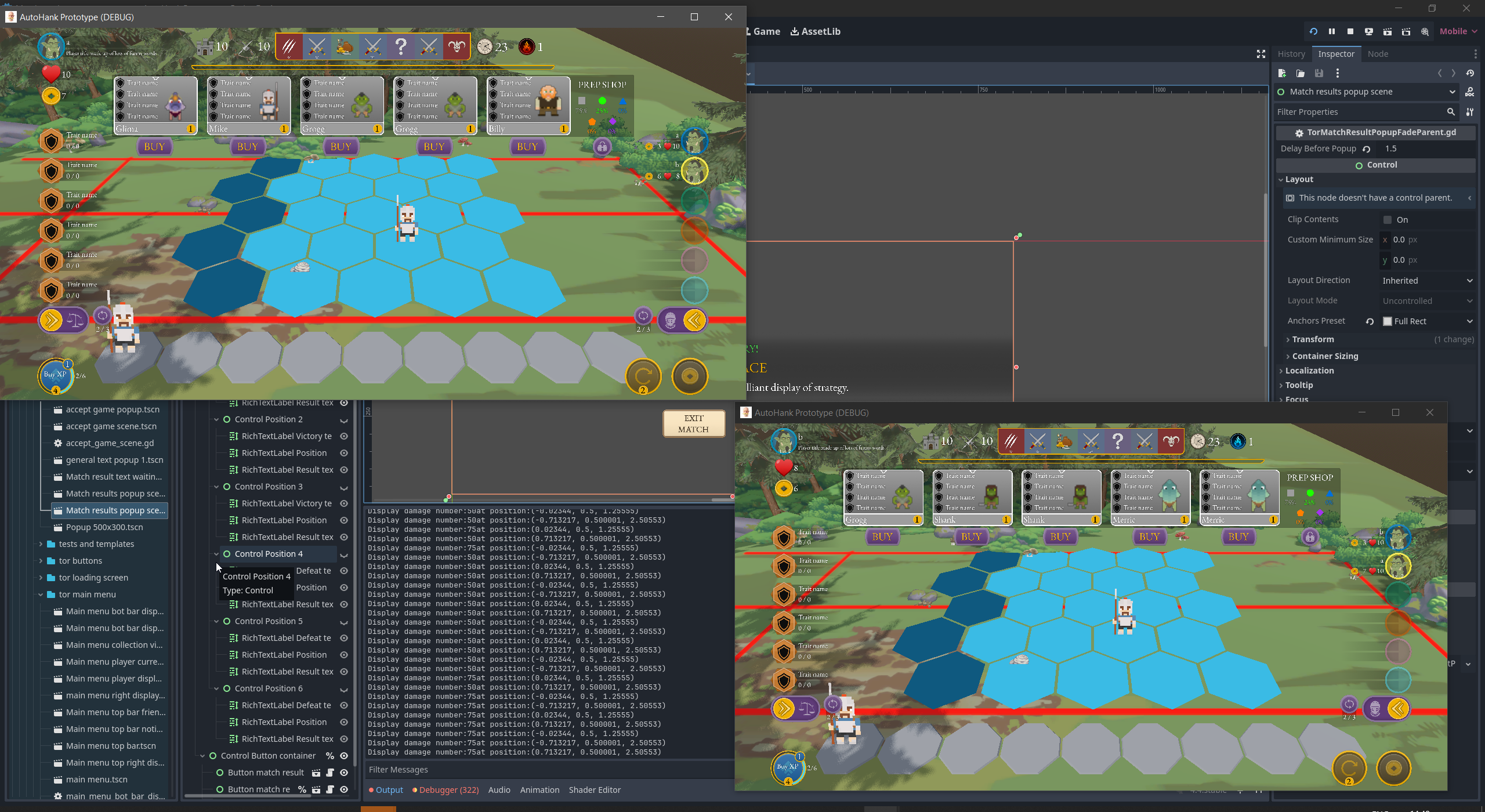 The moment live PvP came up on a live server node: two debug clients, the Godot inspector, and the damage log all at once.
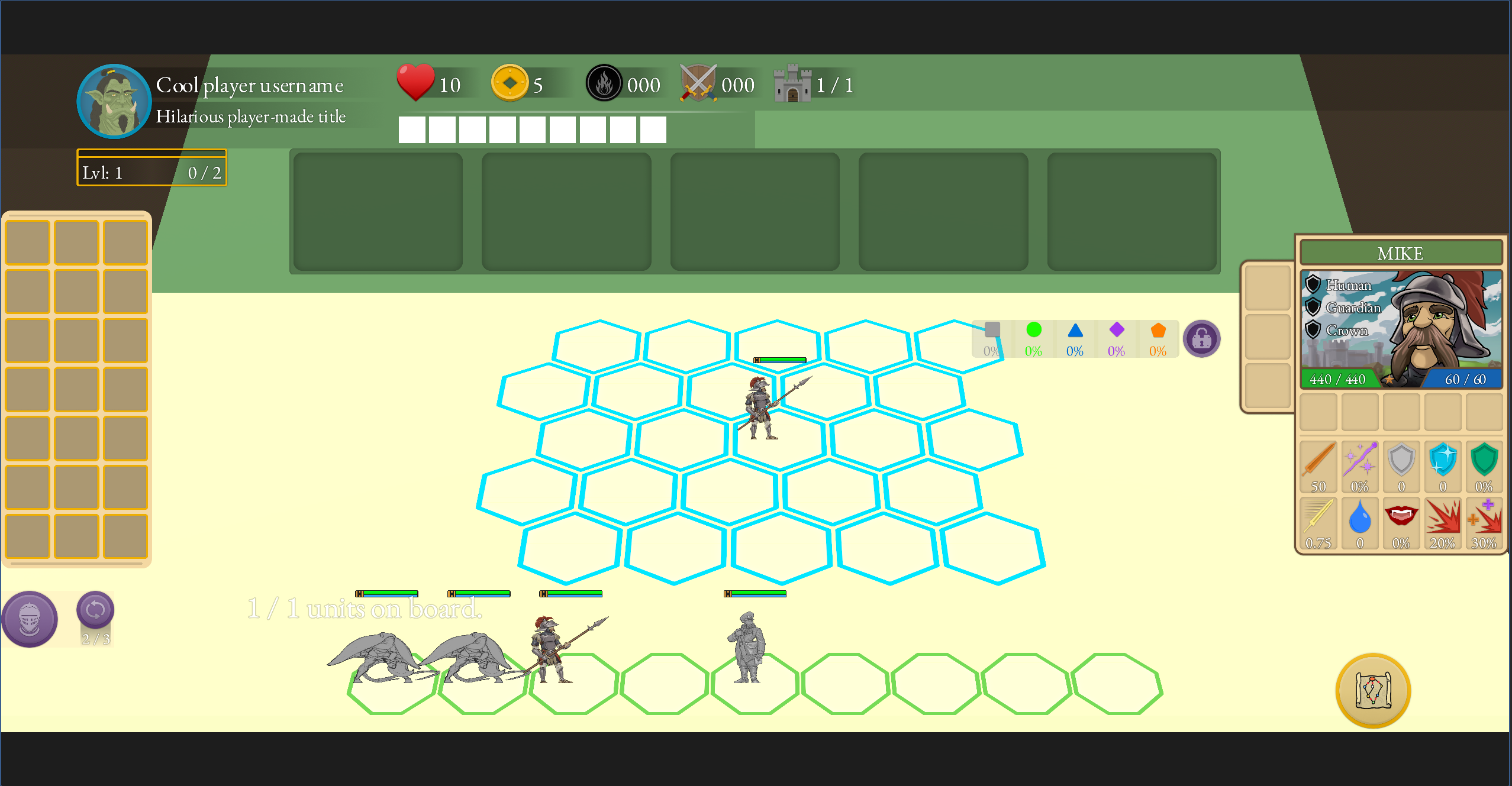 Early async PvE board, from when the async mode was launching.
Game Jam, Unity
Soap Me Up!
Global Game Jam 2025, theme “Bubble”. Built in 48 hours with a team of six, and it took the theme award at the Arctic Game jam site in Jörn.
The game
A 2D puzzle-platformer where you steer a fragile soap bubble through a cave maze using nothing but a fan. Spikes and sharp rock everywhere, and no checkpoint to fall back on. Somewhere in the Jump King and Getting Over It lineage: patience, skill, and a little bit of luck.
Award
Winner of Relevance to the theme “Bubble” at the Arctic Game and Global Game Jam 2025 site in Jörn, outside Skellefteå.
Team
- Anni Tuomainen
- Edvin Nordvall
- Erikas Klesciovas
- Jonathan Johansson
- Oliver Karlsson
- Simon Lindström
Elsewhere
- Award announcement LinkedIn, from the Jörn jam site
- All jam entries itch.io, Arctic Game x GGJ 2025
Media & Production
Futuregames
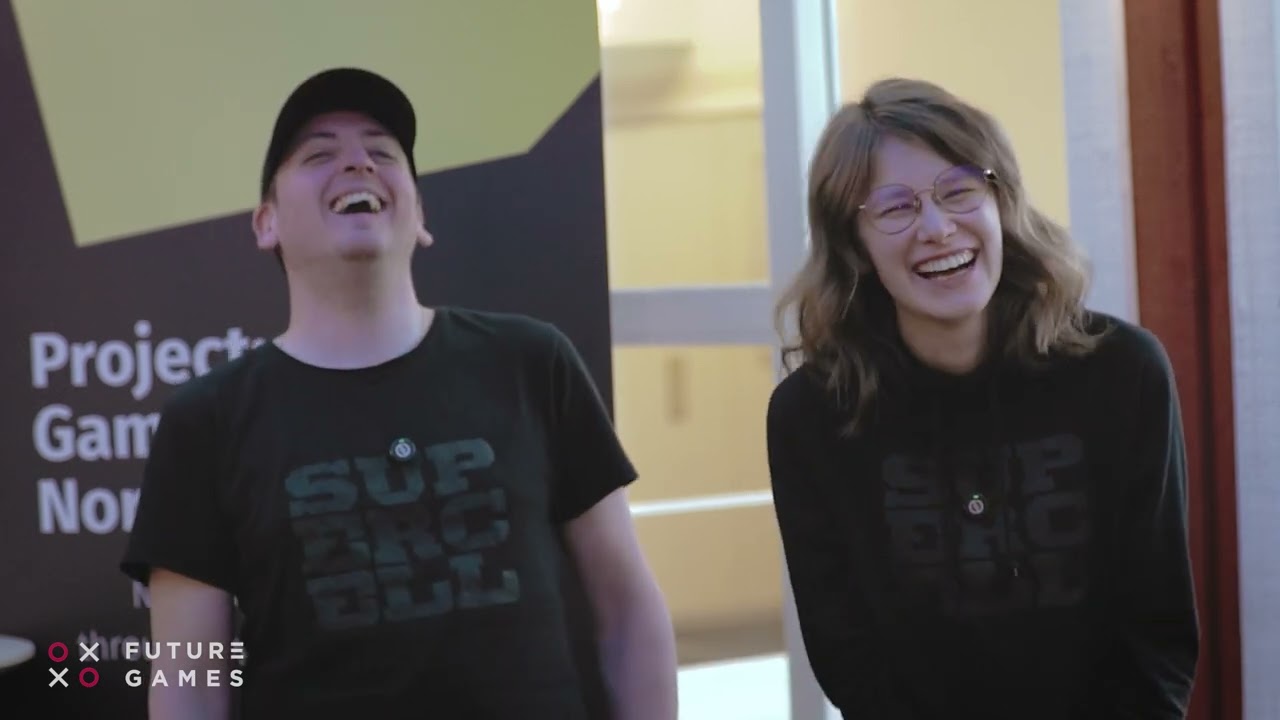
Video and stream production I produced or co-produced during my employment at Futuregames.
In the press
Coverage of Futuregames' Skellefteå campus in Norran.
- Ingen framtid för Futuregames – försvinner från Skellefteå Norran, 13 March 2025
- Populär utbildning nekas ny start i Skellefteå: “Är förödande” Norran, 12 February 2025
More of my games
Most of my released work lives under the Frosty Pixels label.